India is once again witnessing a heated political debate after the recent hike in LPG cylinder prices, with opposition leaders criticizing the central government over the rising cost of household cooking gas. The issue has quickly turned into a national talking point as millions of households feel the pressure of increasing kitchen expenses.
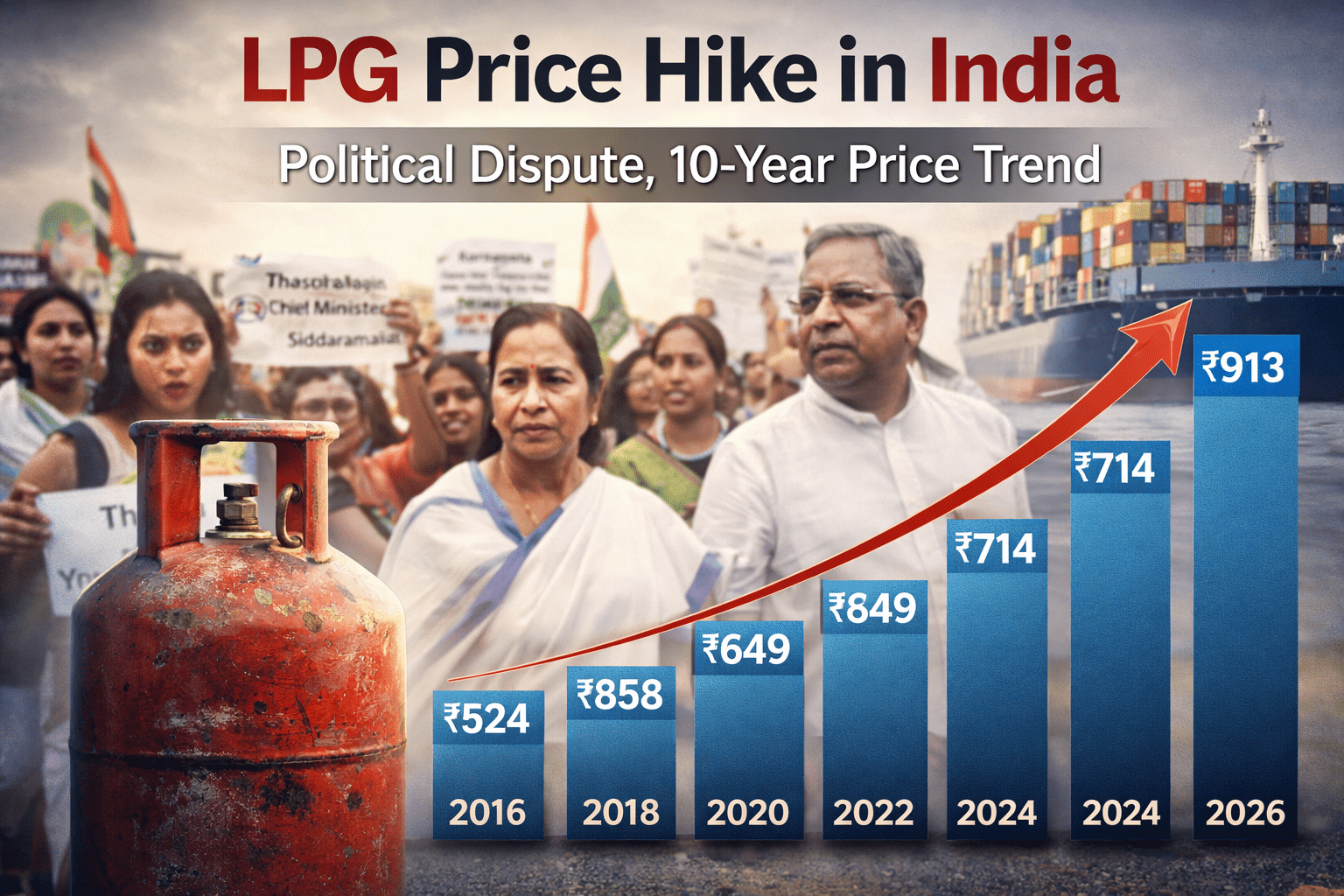
According to recent announcements, the Union government increased the price of domestic LPG cylinders by Rs. 60 for both PMUY (Pradhan Mantri Ujjwala Yojana) beneficiaries and non-PMUY consumers. In Delhi, a 14.2-kg LPG cylinder now costs around Rs.913 for general consumers and about Rs. 613 for PMUY users after subsidies.
Government officials say the price adjustment comes amid global energy supply disruptions and geopolitical tensions in West Asia, particularly affecting shipping routes through the Strait of Hormuz, a critical corridor for oil and gas transport. India imports nearly 85–90% of its LPG from West Asian countries, making domestic prices highly sensitive to global market fluctuations.
Opposition Criticism and Political Protests
The price hike has triggered strong reactions from opposition parties. West Bengal Chief Minister Mamata Banerjee has urged women across the state to organize protests, claiming that rising LPG prices are increasing the financial burden on households.
Similarly, Karnataka Chief Minister Siddaramaiah accused the central government of failing to manage energy imports effectively and demanded accountability for the rising cost of essential commodities.
Political leaders argue that families already struggling with inflation are now facing additional pressure due to higher cooking gas prices. Some opposition figures also linked the issue to India’s changing energy trade dynamics with countries like Russia and Iran.
Government’s Stand
The central government maintains that the increase reflects global supply disruptions and higher import costs rather than domestic policy decisions. Officials say India is currently exploring alternative suppliers such as the United States, Canada, and African countries to stabilize LPG availability.
India consumes over 33 million tonnes of LPG annually, with more than half imported from the Middle East. Any disruption in global supply chains directly impacts domestic pricing.
LPG Price Trend in India (Last 10 Years)
| Year | Average LPG Price (₹ per 14.2 kg cylinder) |
|---|---|
| 2016 | ₹524 |
| 2017 | ₹555 |
| 2018 | ₹649 |
| 2019 | ₹714 |
| 2020 | ₹744 |
| 2021 | ₹819 |
| 2022 | ₹949 |
| 2023 | ₹903 |
| 2024 | ₹903 |
| 2025 | ₹853 |
| 2026 | ~₹913 |
Note: Prices represent approximate average retail rates in major metro cities.
What It Means for Consumers
Despite the government’s argument that the Rs. 60 increase translates to only a few rupees per day for households, critics argue that cumulative inflation in food, fuel, and energy is steadily increasing living costs.
With global energy markets remaining volatile, LPG prices in India may continue to fluctuate, making household energy affordability a key economic and political issue in the coming months.
Written By – Arvind Singh(The Beast Trader)