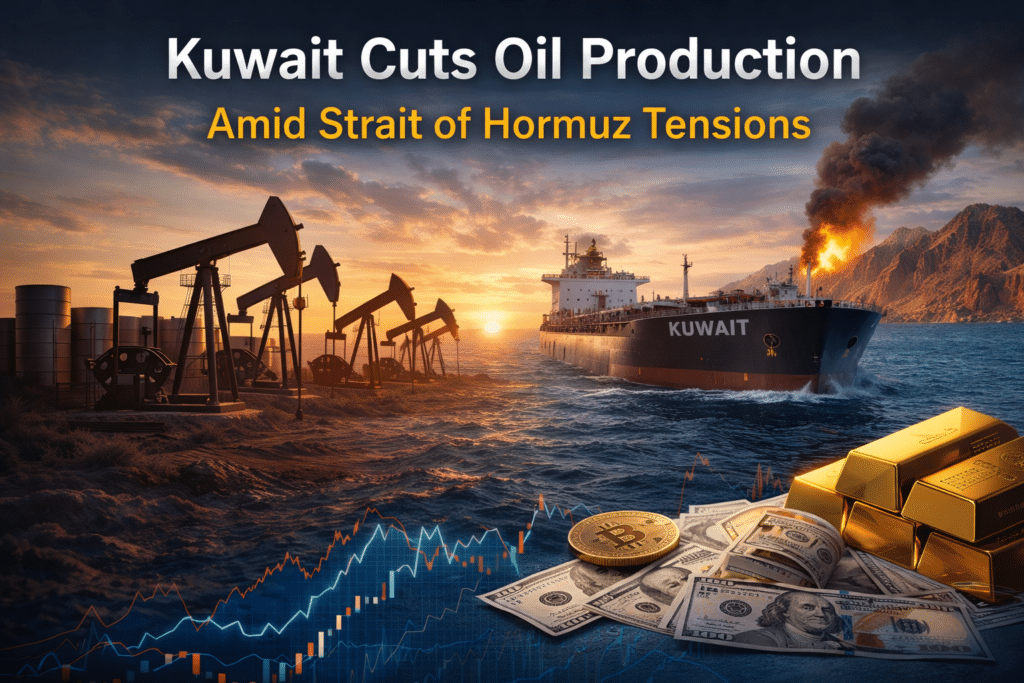
Escalating Gulf Tensions Trigger Oil Supply Concerns
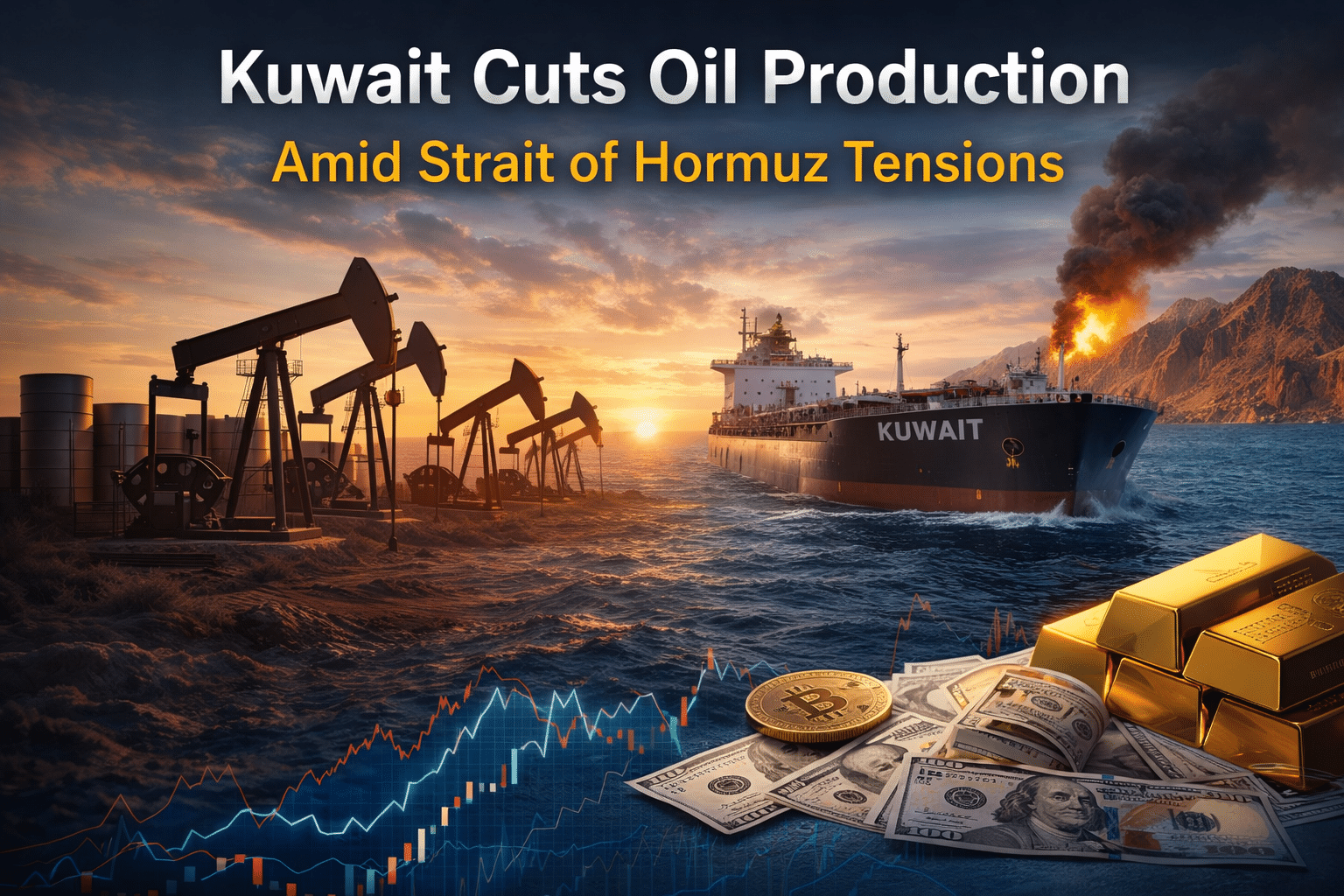
Global energy markets are facing renewed uncertainty after Kuwait announced a precautionary reduction in oil production amid rising geopolitical tensions in the Persian Gulf. The move follows concerns about the safety of maritime traffic through the Strait of Hormuz, one of the world’s most critical oil shipping routes.
Kuwait Petroleum Corporation confirmed that the production cuts were implemented as a defensive measure after threats to shipping routes and increasing instability in the region. The decision reflects growing fears that disruptions in this narrow waterway could trigger major supply shocks across global energy markets.
The Strait of Hormuz carries roughly one-fifth of the world’s oil supply every day, making it one of the most strategically important energy transit routes. Any slowdown or blockade in this corridor can quickly affect oil supply chains, shipping operations, and global commodity prices.
Why Kuwait Reduced Oil Production
Kuwait, one of the top oil producers within OPEC, decided to curb output after maritime traffic slowed in the region. According to officials, the reduction was a precautionary step to manage storage capacity and logistical risks.
As shipping through the Strait of Hormuz slowed sharply, oil exports from several Gulf producers began facing delays. When export routes slow down, oil storage tanks quickly fill up, forcing producers to reduce production temporarily to avoid operational bottlenecks.
Energy market data suggests that if shipments remain restricted, storage capacity could reach its limits within days, forcing further supply adjustments across the region.
Another factor behind the decision is the risk associated with shutting and restarting oil wells. Stopping production can increase operational costs and may even cause long-term pressure damage to reservoirs, making oil fields harder to restart quickly.
Supply Disruptions Across the Persian Gulf
Kuwait’s move comes amid a wider series of disruptions among energy producers in the Persian Gulf.
Several countries have already taken precautionary measures:
- Iraq reduced oil production earlier in the week as exports slowed due to shipping disruptions.
- Saudi Arabia halted operations at its largest refinery after regional security concerns escalated.
- Qatar temporarily shut down a major liquefied natural gas export facility following drone-related security threats.
These developments highlight how geopolitical tensions can rapidly cascade across global energy supply chains.
The Gulf region relies heavily on large oil storage farms and complex pipeline systems that connect production fields to export terminals. When shipping slows, crude oil and refined products begin accumulating in storage tanks. Once these tanks approach full capacity — a condition known in the industry as “tank tops” — producers are often forced to cut output until exports resume normally.
Why the Strait of Hormuz Matters to the Global Economy
The Strait of Hormuz is a narrow maritime corridor linking the Persian Gulf to international waters. Despite its small size, it plays a massive role in global energy transportation.
Every day, millions of barrels of crude oil and refined petroleum products pass through this route on tankers bound for markets across Asia, Europe, and North America.
Because of its importance, even the perception of risk or conflict in the region can move global markets, affecting:
- Oil prices
- Energy stocks
- Commodity markets
- Currency markets tied to oil exporters
A prolonged disruption would not only impact energy prices but could also slow global economic growth by raising fuel and transportation costs.
Potential Impact on Global Oil Prices
Oil markets typically react quickly to any threat to supply routes. Reduced production combined with shipping disruptions can create short-term supply tightness, which may push crude oil prices higher.
However, analysts note that the impact depends on how long the shipping disruption lasts. If maritime traffic through the Strait of Hormuz stabilizes quickly, the supply situation could normalize without a major price spike.
On the other hand, a prolonged disruption could tighten global oil inventories, potentially increasing volatility in energy markets.
Impact on Gold and Commodity Markets
Periods of geopolitical tension often drive investors toward safe-haven assets such as gold.
If tensions in the Gulf continue to escalate, gold prices may receive moderate support due to increased risk sentiment in global markets. However, the scale of any move would largely depend on whether the situation escalates further or stabilizes quickly.
Other commodities linked to energy costs — including industrial metals and transportation-sensitive goods — may also experience temporary price fluctuations due to rising shipping and fuel costs.
Possible Effects on Forex and Crypto Markets
Energy disruptions can indirectly influence currency markets, particularly those tied to oil-exporting economies. Higher oil prices sometimes strengthen currencies of major oil exporters, while oil-importing economies may face increased trade pressures.
However, unless the disruption becomes severe, the forex impact is likely to remain limited and largely sentiment-driven.
Cryptocurrency markets typically react to broader global risk sentiment rather than energy supply changes directly. If geopolitical uncertainty intensifies, some investors may temporarily shift funds toward alternative assets, but the direct impact on crypto markets remains uncertain.
Global Markets Watching the Situation Closely
For now, energy markets are closely monitoring developments around the Strait of Hormuz. The situation remains fluid, and any improvement in maritime security could quickly stabilize supply chains.
At the same time, the recent production cuts highlight how sensitive global energy systems remain to geopolitical tensions in key oil-producing regions.
As long as uncertainty persists, investors and traders across oil, commodities, forex, and global financial markets will continue to watch the Gulf region closely.
✍️ Article by: Arvind Singh
The Beast Trader